
 French
 Deutsch
 Italian
 Russian
 Spanish
 Portuguese
 Turkish
 Japanese
 Korean
 Vietnamese
 Arabic
Undercut Issues: This may be due to improper welding parameter selection, incorrect welding torch angle or position. Adjustments can be made accordingly.
Porosity Issues: This may be due to poor gas shielding, excessively thick primer on the workpiece, or insufficiently dry shielding gas. Adjustments should resolve the issue.
Weld Misalignment Issues: This may be due to incorrect welding position or problems with the welding torch's search.
In this case, check the accuracy of the TCP (welding torch center point position) and adjust it. If this occurs frequently, check the zero position of each robot axis and recalibrate.
Excessive Spatter Issues: This may be due to improper welding parameter selection, gas composition issues, or excessively long welding wire extension. Adjusting the machine power to change welding parameters, adjusting the gas mix meter to adjust the gas mixture ratio, and adjusting the relative position of the welding torch and workpiece can help.
Cradle Formation at the Weld End After Cooling: Adding a crater filling function during programmable steps can fill this crater.
Common Robot System Faults During Welding:
Torch Collision:This may be due to workpiece assembly deviations or inaccurate welding torch control points (TCP). Check the assembly or correct the torch TCP.
Arc Failure, Inability to Ignite:This may be due to the welding wire not contacting the workpiece or insufficient process parameters. Manually feed the wire, adjust the distance between the torch and the weld, or adjust the process parameters appropriately.
Shielding Gas Monitoring Alarm:This indicates a fault in the cooling water or shielding gas supply. Check the cooling water or shielding gas lines.
With the development of manufacturing technology, the automation, flexibility, and intelligence of welded product manufacturing have become an inevitable trend.
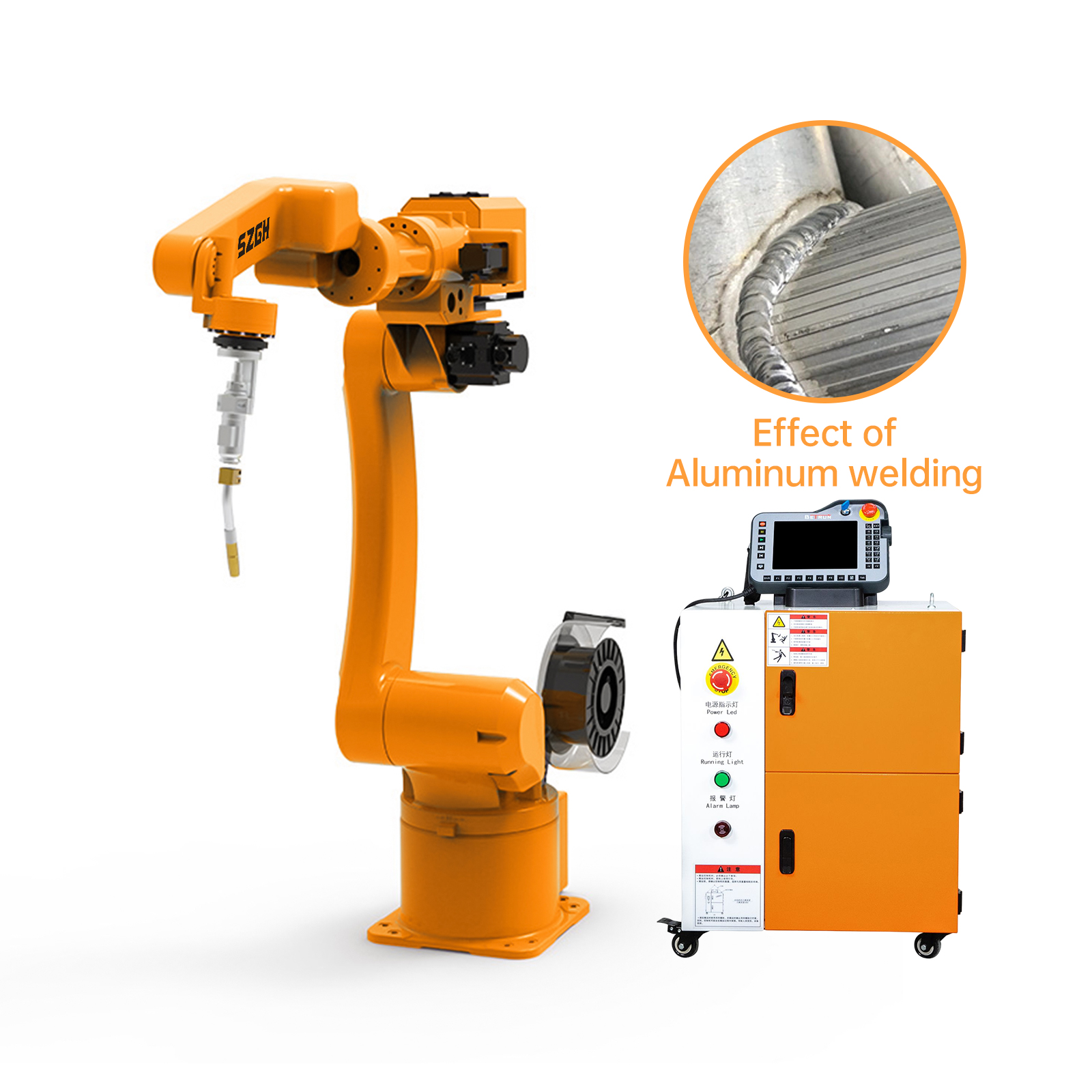
Currently, the use of robotic welding has become a major indicator of the modernization of welding automation technology. Welding robots, due to their versatility and reliability, have received increasing attention.
Welding robots have become an indispensable part of industry, with robotic arms applied across various sectors, bringing efficiency and convenience to each industry. Robotic arms are designed to complete the specified transfer and positioning of workpieces according to production process requirements, following certain procedures, times, and positions. Their application is most widespread in high-temperature, high-pressure, dusty, noisy, and radioactive or polluted environments.
Welding robots are automated mechanical devices that mimic human hand movements, automatically grasping, transporting, or manipulating objects according to specified programs, trajectories, and requirements. Robotic arms used in industrial production can be categorized into handling robots, palletizing robots, feeding robots, welding robots, spraying robots, hot forging welding robots, and so on.
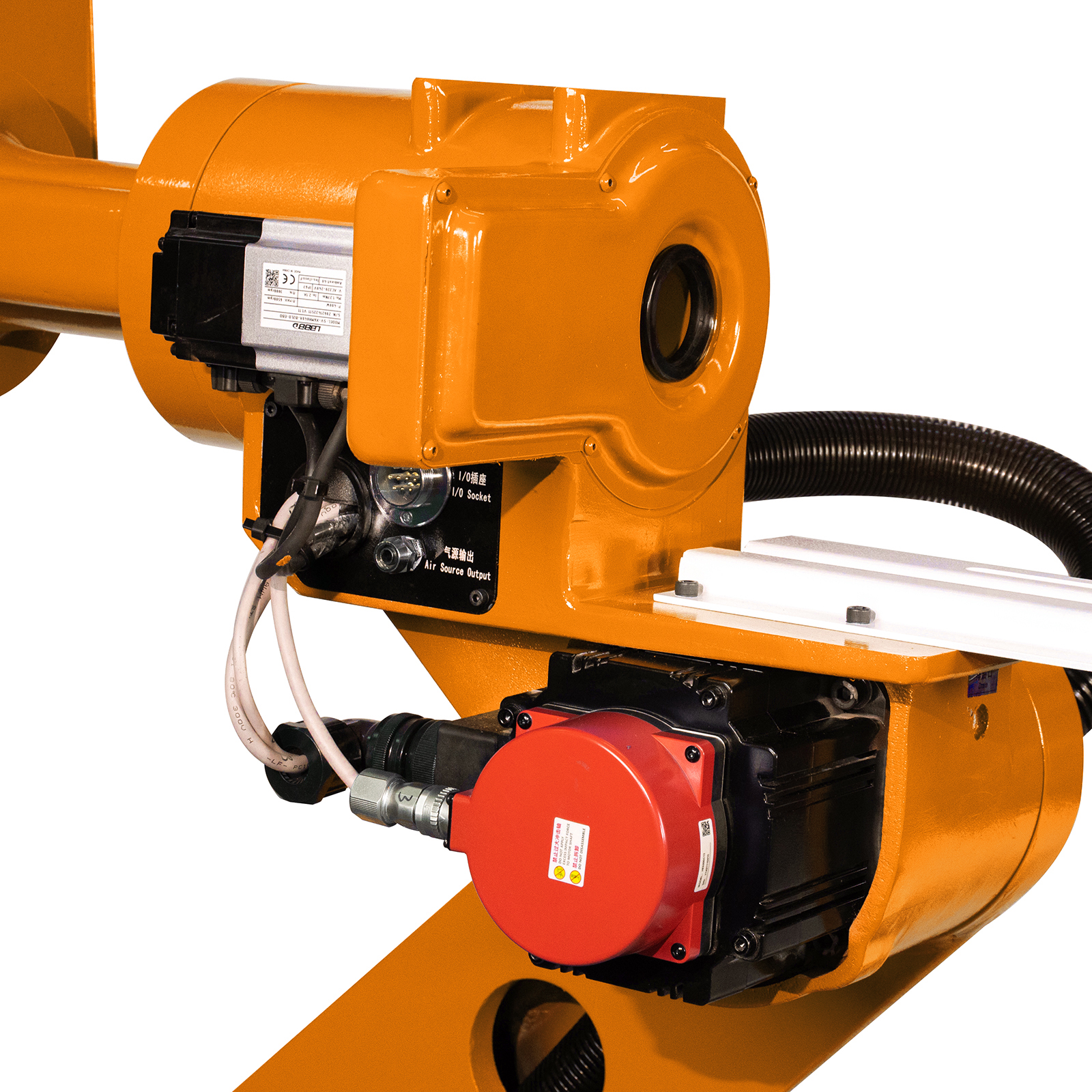
The drive mechanism in a welding robot is also a crucial component of industrial robotic arms. Based on different power resources, the drive mechanisms of industrial robotic arms can be broadly classified into four categories: hydraulic, pneumatic, electric, and mechanical drives. Robotic arms driven by electric mechanisms have a simple structure, compact size, and convenient operation, reflecting human intelligence and adaptability. The accuracy of the robot's operation and its ability to complete tasks in various environments will lead to its wider application.
Of course, routine maintenance of the welding robot is also essential. For example, all moving parts, guide rails, and rollers should be lubricated with grease, and closed-loop transmission parts should be lubricated with oil to ensure smooth movement of components. Special attention should be paid to the maintenance of the center wheel and eccentric wheel components, ensuring their tightness and guaranteeing straight arm movement.
Simultaneously, it is necessary to regularly inspect and clean all moving parts of the welding robot, such as guide rails, carriages, lead screws, and nuts, to prevent dust accumulation, flux spillage, and other debris from affecting the smooth movement of the parts. Collisions and wear on the mating surfaces of the sliding guide rails are not permitted. Regularly check the wear condition of key moving parts such as lead screws and racks, and repair or replace them promptly if problems are found, and tighten the nuts.
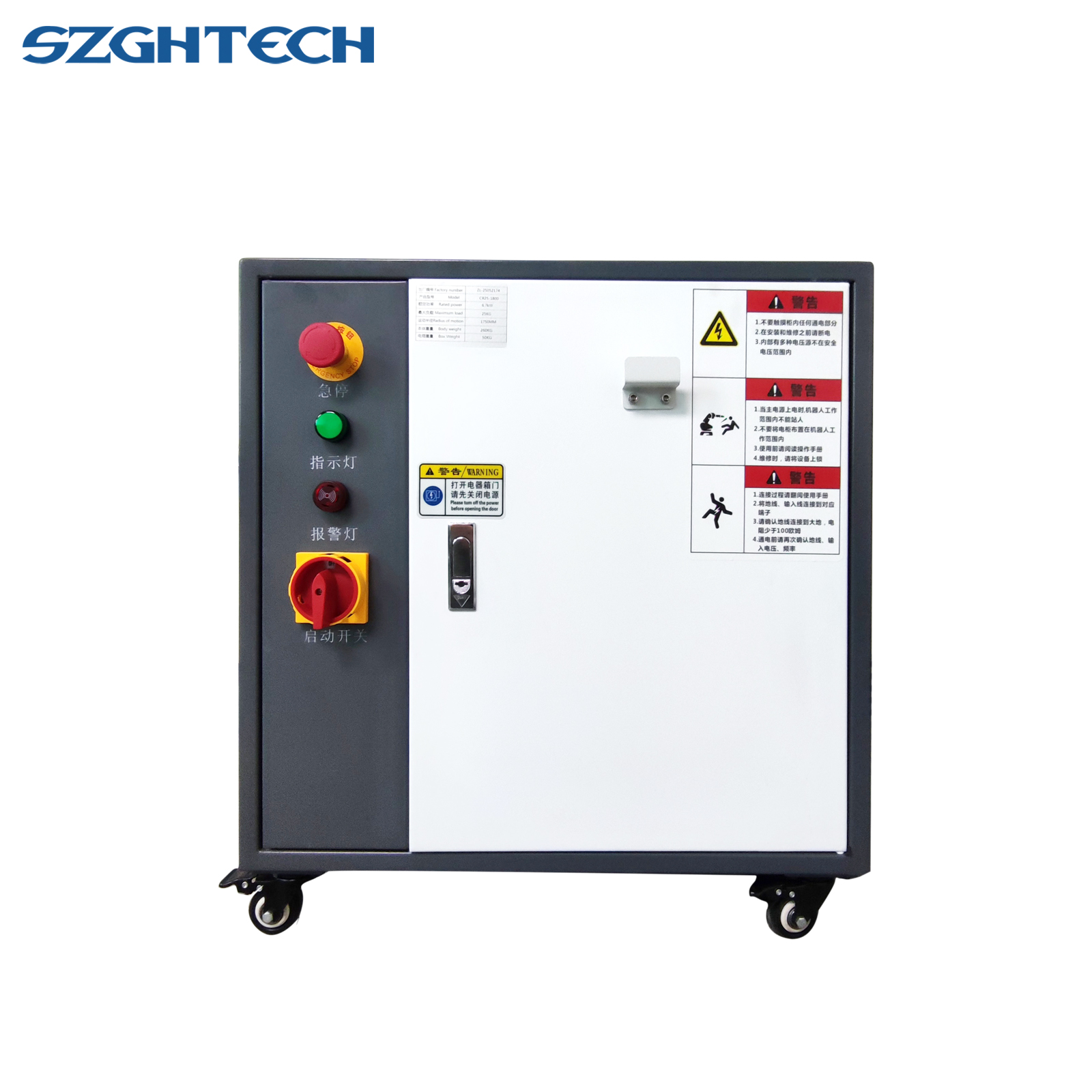
Additionally, it is necessary to regularly check the flexibility and reliability of the limit switches on the welding robot, and whether the mechanical protection blocks are loose or damaged. Regularly check the circuit connectors, ensuring they are secure and reliable. Every three months, use compressed air to blow away dust from the workstation controller and handheld device, keeping relays, knobs, and switches clean and in good contact.
Choosing a Reliable Brand and Service System: The stability of welding robots is closely related to their maintenance. Selecting a reputable brand with comprehensive after-sales support can reduce potential problems during use.
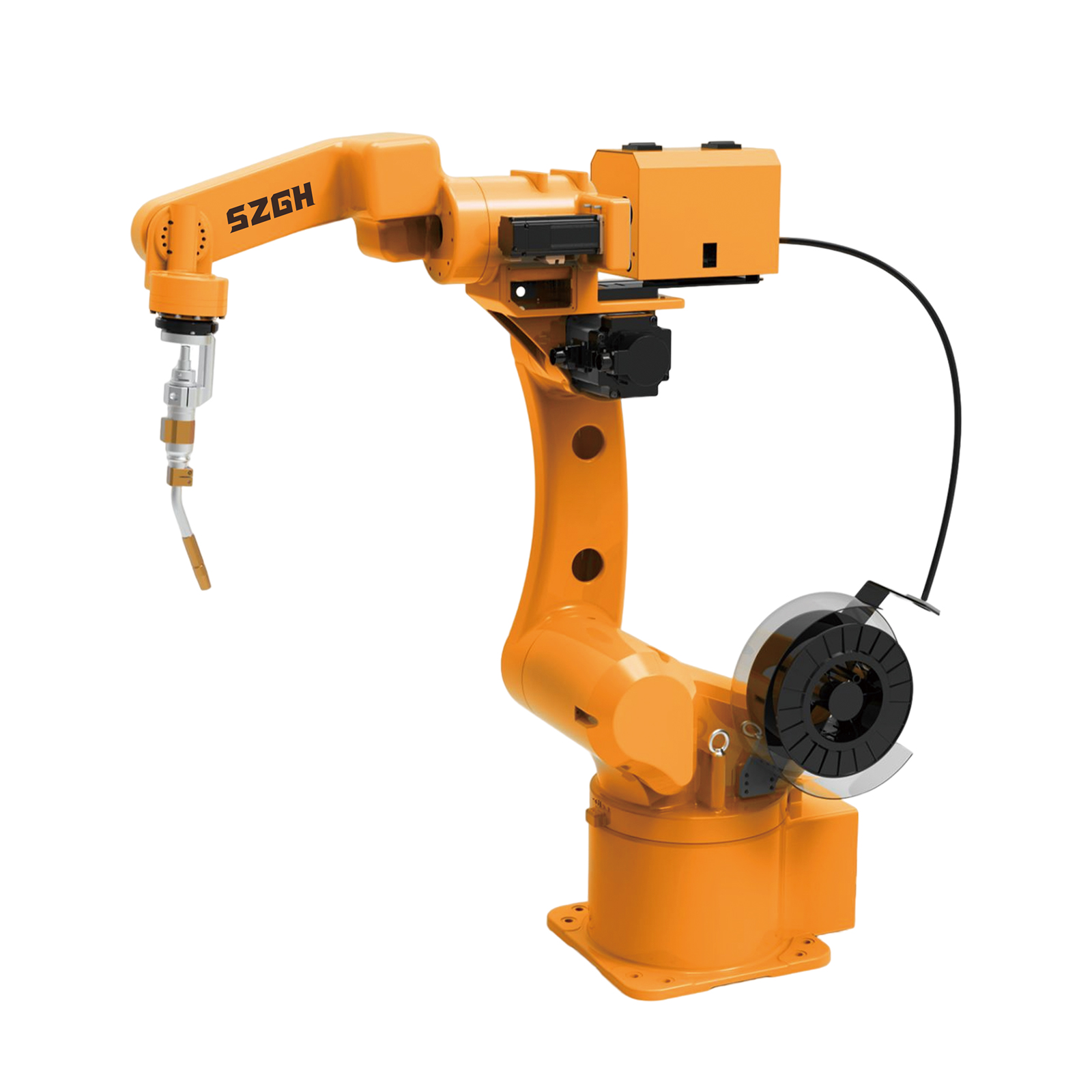
The Overall Value of Welding Robots Far Exceeds Expectations: Choosing the right welding robot is not just about improving welding quality and production capacity. More importantly, it brings a series of positive effects, such as reduced labor costs, standardized workshop management, and shorter product delivery cycles. For manufacturing companies hoping to stand out in a competitive market, welding robots are no longer an option, but a core competitive advantage that must be invested in.